
Abstract
Heat health responses for young children constitute a unique public health challenge and Oral Rehydration Solution (ORS) have emerged as a key intervention in various advisories and heat action plans HAPs). ORS is an extraordinarily impactful first-line therapeutic intervention in reducing mortality and morbidity on account of dehydration and dyselectrolytemia in children caused by acute diarrheal diseases and is backed by state health and non-health agencies the world over. The reconstitution of ORS into a solution for oral rehydration therapy relies on the packaging instructions and frontline health workers; systematic reviews highlight low levels of knowledge and understanding of these aspects. Most of these HAPs and advisories are conspicuously silent on reconstitution and dosages. We have drawn upon available global literature and Indian evidence to shape this discourse across three strands – policy perspectives, clinical evidence and critiques on inappropriate usage of ORS and mislabeling of rehydration fluids to shape our arguments. It is imperative that only WHO formulated ORS is used for this purpose. Heat Action Plans need to specify age- and weight-specific ORS guidance, in line with the UNICEF advisory. India’s linguistic diversity calls for multilingual and pictorial instructions for correct preparation by caregivers, Capacity building of first responders and frontline health workers to correctly administer ORS for children’s HRIs is also an urgent imperative.
Physiological heat vulnerabilities for children
Infants and young children have specific heat-related physiological and behavioral vulnerabilities: (i) children produce more heat per kilogram of body weight; (ii) younger children have a higher surface area-to-mass ratio and absorb more heat from the environment; (iii) children have lower sweat rate per gland and begin to sweat only at a higher body temperature; (iv) infants experiencing heat stress have less capacity for regulating their temperature independently; (v) infants and young children have poorer blood circulation and lower proportional cardiac output and therefore are unable to adapt quickly to changes in temperature; and (vi) children tend to spend a lot of time outdoors and inadequately replenish fluid loss sustained during prolonged exposure and playing, leading to exertional heat illnesses. There are clear associations between pediatric emergency room visits and extreme heat events, mostly on account of dehydration, electrolyte disorders, gastrointestinal infections, and exacerbations of bronchial asthma.
Dehydration in the context of HRIs is generally assessed by urine color or volume but a robust point-of-care test to detect/measure dyselectrolytemia is not available. Consumption of plain water quenches thirst and provides short-term relief during dehydration but excessive heat leads to further water loss. ORS, an iso-osmolar glucose-electrolyte solution with base and citrate, helps replenish fluids and electrolytes lost due to sweating by helping the body absorb fluids more efficiently, thereby balancing the electrolyte levels and restoring homeostasis.
Related Post

Where is heat on my priority list?
The intensity and severity of heatwaves in India and across the globe have been steadily rising. Some desert regions in India are now experiencing extreme temperatures—reaching as high as 52°C. What once felt exceptional is now becoming the norm. Every summer, the front pages of newspapers have startling headlines on how heat has broken a […]

Sustainable Cooling Matters
By Sandipta Rath, Anwesha Mishra, Sruti Mohapatra, Purnasha Pany CHHANW team, Institute of Economic Growth “Buying an AC was never a choice but a need. When my father collapsed due to sunstroke during work, we made the decision to prioritize his health even if it means we will be tied to monthly installments and high […]
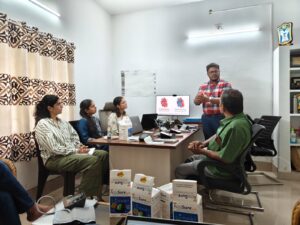
Field Investigator Training on Physiological and Meteorological Measurement devices and tools in Bhubaneswar
A full-day classroom training was held on 26th April 2026 in Bhubaneswar, Odisha, for Field Investigators to aid them with technical knowledge and practical skills in physiological measurement, meteorological monitoring, and survey administration. The first session focused on how to use devices for measuring the physiological parameters, such as blood pressure monitors, heart rate monitors, […]

Keynote Address by Prof. Purnamita Dasgupta: Navigating the Complexities of Climate Change and Development
Prof. Purnamita Dasgupta from the Institute of Economic Growth delivered a keynote address on the intricate relationship between climate change and sustainable development titled “Climate Change and Sustainable Development – Equitable and Integrative Action” at the 23rd IASSI Annual Conference held at BIT Mesra, Ranchi, from October 25th to 27th, 2024. Prof. Dasgupta emphasised the […]