Economic And Health Impact Assessment Of Heat Adaptation Action:
Case Studies From India
Chhanw Team

Environmental Economics Unit, Institute of Economic Growth, Delhi
Purnamita Dasgupta is Chair Professor & Head, Environmental Economics Unit, at Institute of Economic Growth, Delhi, India. Her research and teaching focus on the relationship between environment and economic development, with a special focus on the concerns of climate change, human health, and sustainability. She specialises in applying economic models for costing, valuation, and financial analysis while working in interdisciplinary teams. Her research has been funded by grants from the Government of India and several international agencies. She has been a visiting professor at the University of Cambridge, UK, and Johns Hopkins University, USA. She has served as a CLA of the Intergovernmental Panel on Climate
Change (IPCC) and the Intergovernmental Science-Policy Platform on Biodiversity and Ecosystem Services (IPBES). She has served on several committees of the Government of India. Her publications include books (Springer Nature) and several articles in books and international journals, and she serves on several international editorial boards and review committees.

Jawaharlal Nehru University, Delhi
Rajib Dasgupta is a public health physician and professor at the Centre of Social Medicine & Community Health at the Jawaharlal Nehru University, New Delhi. With three decades of experience in public health services and academia, he brings together the optimal mix of epidemiology, social sciences, programme management, research, and policy engagement. He works in multi-country multi-disciplinary teams, and many of the projects he is involved in uses mixed-methods approaches. He has been a Fulbright Senior Research Fellow at Johns Hopkins Bloomberg School of Public Health, Baltimore, Key Technology Partner at University of Technology, Sydney, and an Erasmus+ fellow at Tampere University. He handled key responsibilities related to COVID-19 and G20 media and communications. Widely published in national and international journals, he was Managing Editor of the Indian Journal of Community Medicine and is currently the Editor of the Indian Journal of Public Health. He is a regular commentator on public health matters in national and international electronic media and a columnist in leading national newspapers.

University of Washington, Seattle, USA
Kristie L. Ebi, Ph.D., MPH is a Professor in the Center for Health and the Global Environment (CHanGE) in the School of Public Health, University of Washington. She has been conducting research on the health risks of and adaptation to climate variability and change for more than 30 years. Her research focuses on estimating current and future health risks of climate change; designing adaptation policies and measures to reduce the risks of climate change in multi-stressor environments; and quantifying the health co-benefits of mitigation policies. She has worked with multiple countries in Africa, Central America, Europe, Asia, and the Pacific in assessing their vulnerability and implementing adaptation measures. She was a lead author for the Intergovernmental Panel on Climate Change (IPCC) 6th assessment cycle, including the special report on warming of 1.5°C and the human health chapter for Working Group II. She edited four books on aspects of climate change and has more than 200 peer-reviewed publications.

University College London, London
Clare Heaviside is an Associate Professor in Climate Change, Cities and Health in the Institute for Environmental Design and Engineering at UCL. Her research is multi-disciplinary, covering climate change, air pollution, urban climate modelling, and associations with health. Clare is interested in how environmental changes affect health, e.g., direct heat-related impacts associated with the urban heat island, and how we might reduce some of these health impacts through adaptation measures, particularly in urban areas. Clare has an MSc in meteorology from University of Reading, and a PhD in Atmospheric and Oceanic Physics from Imperial College London. After her PhD, she worked in the public health sector for a decade, becoming head of Climate Change at Public Health England in 2017, before joining University of Oxford, later UCL, as a NERC Independent Research Fellow. Clare is PI of the Wellcome HEROIC (Health and Economic impacts of Reducing Overheating In Cities) project.
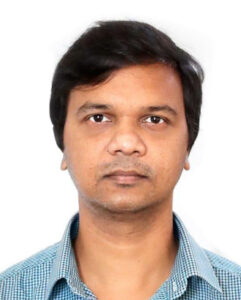
Institute of Economic Growth, Delhi
William Joe is Assistant Professor at the Population Research Centre, Institute of Economic Growth, Delhi. Dr. Joe has a PhD in Economics from Jawaharlal Nehru University. Currently, he is engaged in monitoring and evaluation activities for the Ministry of Health and Family Welfare (MoHFW, Government of India) with specific focus on the National Health Mission. He is also a member of the Technical Advisory Groups on Nutrition for the Government of Karnataka and the Government of Jharkhand. Dr. Joe also leads the UNICEF-IEG collaboration on Anemia Mukt Bharat technical support activities for MoHFW.
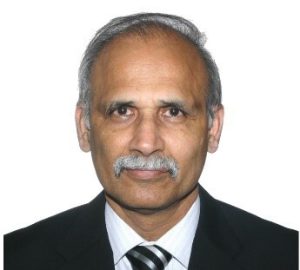
Indian Institute of Tropical Meteorology, Pune
Rupa Kumar Kolli is an Honorary Scientist and former Executive Director of the International Monsoons Project Office (IMPO), at the Indian Institute of Tropical Meteorology (IITM), Pune, India.
Dr Kolli served as the Chief of World Climate Applications and Services Division at World Meteorological Organization (WMO) Secretariat, Geneva, Switzerland, during 2006-2019. He served as the Vice-Chair of the WMO Standing Committee on Climate Services (SC-CLI), during 2020-24. He is currently a core member of SC-CLI and Co-Lead of Expert Team on Climate Services Information Systems for Decision Support. He has been a founding member of the Managing Committee of Global Heat Health Information Network (GHHIN).
Dr Kolli worked at IITM from 1982 to 2006 and was the Head of its Climatology and Hydrometeorology Division. He co-authored a book on “Climates of South Asia”, published several research papers on climate prediction, climate change and climate services. He contributed as one of the Lead Authors on regional climate projections for the Fourth Assessment Report (AR4) of the Intergovernmental Panel on Climate Change (IPCC) in 2007. He received his Ph.D. (1981) and M.Sc. (1976) degrees in Meteorology from Andhra University, Visakhapatnam, India.
Dr Kolli is a Fellow of the Indian Meteorological Society (IMS), and has served as IMS President for the term 2022-24.

Jawaharlal Nehru University, Delhi
Meeta Keswani Mehra is a Professor of Economics at Jawaharlal Nehru University (JNU) in the Centre for International Trade and Development (CITD), School of International Studies (SIS), India. She holds a Ph.D. from the Indian Statistical Institute, Delhi, and has been with JNU since 2004. Her research spans environmental and climate economics, climate adaptation, heat and health impacts, growth theory, international trade, and energy economics. With over 30 years in research and 22 years of teaching experience, Meeta has also served as an Expert Reviewer for the IPCC Sixth Assessment Report. Her academic career includes prestigious fellowships such as the DAAD-funded visit to HTW-Berlin in 2010, a Chair Professorship in Kyiv in 2013, and the Rockefeller Bellagio Residency in 2013. In 2023, she received the Senior Scholar Mobility Grant from swissuniversities to visit Swiss institutions. Meeta’s research is funded by various organizations, including UNEP, UNDP, IGC (UK), and the Wellcome Foundation, focusing on climate change, heat stress, and sustainable energy. She is an active member of several professional bodies and has published extensively in high-ranked journals and presented her work internationally.

Development and Environment Futures Trust, Bhubaneswar
Arabinda Mishra is the Chairperson, Development and Environment Futures Trust (DEFT). A trained economist with over 25 years of experience in inter-disciplinary research, capacity building, and policy engagement in areas of sustainable development, livelihoods, adaptation, and resilience building. He has served in leadership roles across multiple institutions of repute such as International Centre for Integrated Mountain Development (ICIMOD), The Energy and Resources Institute (TERI), TERI University, and Centre for Multi-disciplinary Development Research (CMDR). Till recently he was serving at ICIMOD in Nepal and leading research and implementation of multi-country projects on adaptation solutions for mountain people. Presently he is affiliated to Population Council as Senior Policy Advisor on a consultancy basis. He is also a senior consultant to the Asian Development Bank, Manila on climate change and regional cooperation among SAARC Member Countries
Research Team

Girika Sharma is a Senior Research Analyst (SRA) on the project Economic and Health Impact Assessment of Heat Adaptation Action: Case Studies from India at the Institute of Economic Growth. She holds a Master’s degree in Economics from the Centre for International Trade and Development (CITD), Jawaharlal Nehru University (JNU).Her research interests lie at the interface of climate and environmental economics, heat and health impacts, and gender economics.


Dr. Oscar Brousse joined the UCL in September 2020 to work as a research fellow on the HEROIC project funded by Wellcome Trust. His training as a geographer specialized in urban climate studies and modelling permitted him to work in a variety of research environments. In particular, Oscar worked at the CIEMAT in Spain, the Purdue University in the USA, and the KU Leuven in Belgium. His research is published in peer-reviewed international journals, mostly focusing on environmental and climate sciences. Oscar speaks French, English, Spanish, and a bit of German and Dutch.

Reeta Saxena is a Public Health and Social Development professional with over 12 years of experience in project management, M&E, capacity building, and healthcare delivery. She currently serves as Project Coordinator for the Economic and Health Impact Assessment of Heat Adaptation Action at the Institute of Economic Growth.
She holds a Master’s in Social Work and an MBA, with experience spanning maternal and child health, family planning, tuberculosis elimination, gender equity, and climate resilience. Reeta has worked with organizations such as Engender Health, FRHS India, and World Health Partners, bringing expertise in strategic intervention design, data systems management, and gender-transformative programming.

Shreya Pujari is a Research Analyst (RA) working on the project “Economic and Health Impact Assessment of Heat Adaptation Action: Case Studies from India” at the Institute of Economic Growth. She completed her Master’s degree in Public Health (MPH) from Dr. B.R. Ambedkar University, Delhi. Her research interests lie in the intersection of public health and climate change, climate-induced migration and health policy & programme implementation.

I am working as a Research Analyst (RA) on the project “Economic and Health Impact Assessment of Heat Adaptation Action: Case Studies from India” at the Institute of Economic Growth. My work focuses on assessing the economic and health implications of heat stress and evaluating adaptation strategies using quantitative and policy-oriented research methods.
Previously, I served as a Research Intern at the Reserve Bank of India, where I worked extensively with large-scale datasets and contributed to data-driven policy analysis.
I hold a postgraduate degree in Economics, with training in applied econometrics, survey data analysis, and inequality measurement. My research interests lie in development economics, public policy, climate economics, and the use of data analytics to generate actionable insights for evidence-based decision-making.
Project Alumni

Anussha Murali is a senior research analyst at the Institute of Economic Growth, Delhi. They recently completed their M.Phil in Social Sciences in Health from Jawaharlal Nehru University, Delhi. Their research interests include the sociology of mental health, gender-sexuality and public health.

Gudakesh completed his M.Phil. and Ph.D. in Population Studies from the International Institute for Population Sciences (IIPS), Mumbai. His interests include heat and health, climate-resilient health systems, nutrition, maternal and child health, and socio-economic inequalities in health. In his previous role, he has been involved in the National Family Health Surveys (NFHS), rounds 5 and 6, monitoring the National Health Mission (NHM), and other research projects with the Ministry of Health and Family Welfare.

Khushboo Aggarwal is an Assistant Professor at Institute of Economic Growth. She holds her Ph.D. in Economics from Centre for International Trade and Development, Jawaharlal Nehru University, New Delhi. Her area of research includes development economics, health economics, economics of education and economics of gender. Presently she is associated with Project entitled “Economic and Health Impact Assessment of Heat Adaptation: Case Studies from India” funded by the Wellcome Trust of the Institute.