
Responding to heat-related health risks: the urgency of an equipoise between emergency and equity
THE LANCET Planetary Health (Volume 8, Issue 11, November 2024)

Summary
In the summer of 2024, there were higher temperatures than usual in several parts of India. Temperatures in Delhi, a huge city with millions of residents, broke several previous records. Low-income households have dwellings that do not offer much protection from the heat, and individuals struggle to access basic amenities, such as water. With accumulating evidence on consequent impacts for mortality and morbidity, governance structures are seeking to respond in a timely and efficient manner. There is a need to recognise that heat-related illnesses and deaths are not best addressed merely as an acute disaster but as public health and economic challenges that require planned responses. Responses that are sustainable and equitable combine long-term structural efforts at resilience building with emergency preparedness and prove to be most effective in averting the largely preventable deaths, morbidities, and economic shocks arising from heat-related health risks among exposed and vulnerable communities. Joint action on climate and health enhances achievement of multiple developmental goals with multistakeholder participation. Diverse sectors, including medical care, surveillance, risk communication, disaster preparedness, livelihoods and jobs, and adaptation and urban planning, are needed to raise public awareness and engagement, induce behavioural change, and focus resources for the much-needed structural changes in urban planning and health systems that can save lives and avert damages. To reduce heat-related health risks, vulnerability, inequity, and climate action in the Indian context must be urgently addressed.
Related Post

Training Workshop on Impact Evaluation of Development Programs
Girika Sharma, a senior research analyst at the Institute of Economic Growth (IEG), attended a training workshop on Impact Evaluation of Development Programs held during 22-24 October 2024. The workshop focused on key methodologies and techniques for impact evaluation in development programs. Day 1 began with an introduction to impact evaluation, including when and why […]
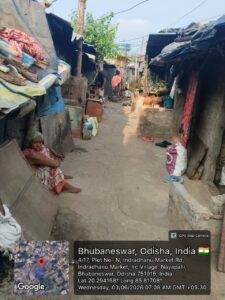
Heat, Thunderstorms and Pakhala: Commendable work by our Field Teams
The project team has been implementing cool-roofs as an intervention as an experiment with treatment households having their roofs painted with white reflective paint, and a control group which does not receive this intervention. Measurements of indoor and outdoor temperature and humidity, and physiological parameters are being done for both groups. Our field teams are […]

I am not stronger than heat: Heat-Health Risks Call for Urgent Action from Employers
Summers are getting hotter, and for outdoor workers, the heat isn’t just uncomfortable — it can be dangerous. During my visit to a low-income setting in Jaipur, I met Kishore Kumar (name changed), a 42-year-old construction labourer who learned the hard way how prolonged exposure to extreme heat can take a serious toll — not […]