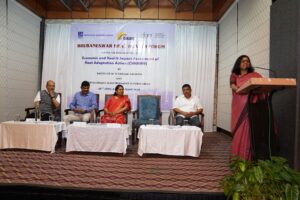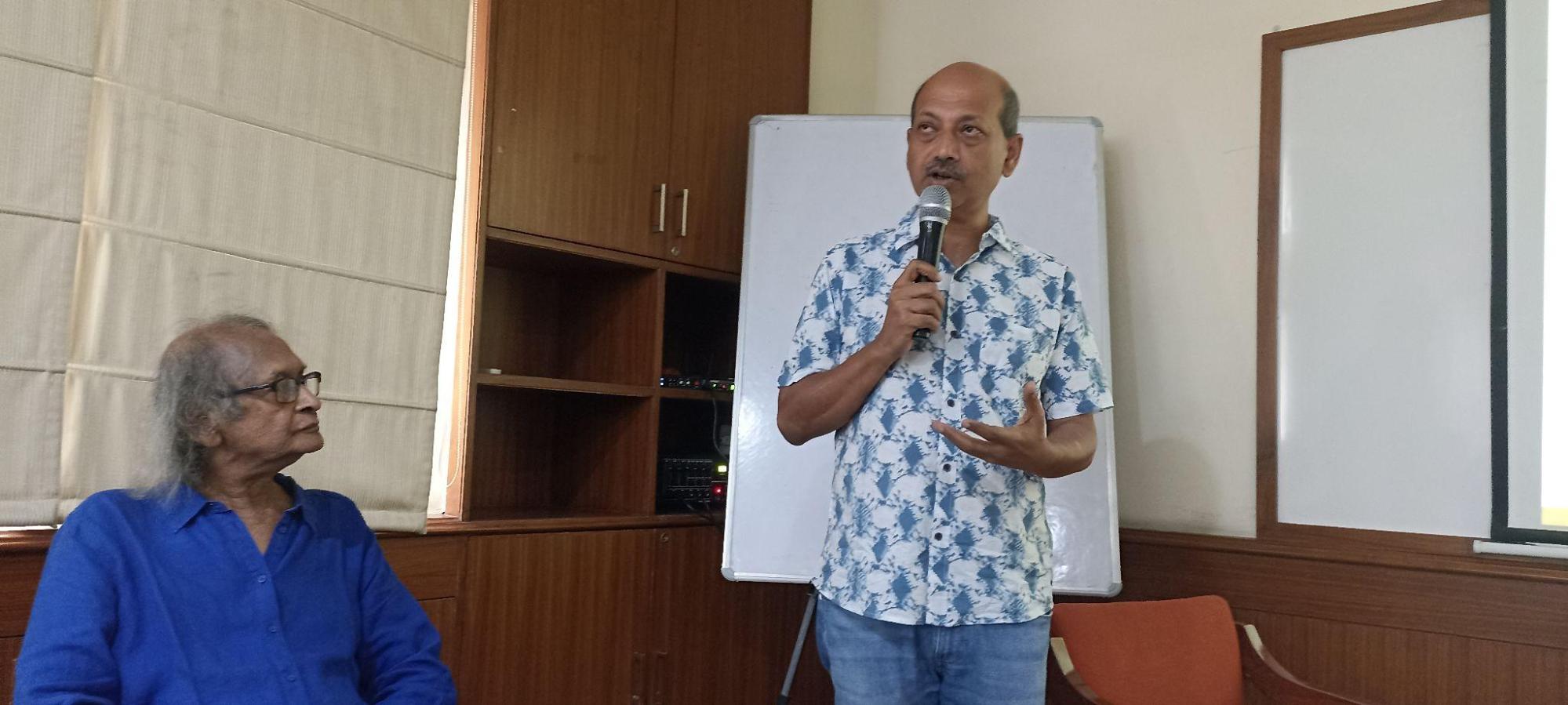
Professor Rajib Dasgupta, a co-principal investigator on project CHHANW, presented a talk titled “Heat Action Plans in a Warming India: Shifting the Gaze to Community-centred Approaches” at the Workshop on Science and Technology: Agenda for Self-reliant India organised by Delhi Science Forum on 31 August 2024 at Indian Social Institute, New Delhi. Other contributors to the work included Dr Purnamita Dasgupta, Anussha Murali and Girika Sharma.
The core elements of Heat Action Plans (HAPs) were reviewed under the themes of: agreement on a lead body; accurate and timely alert systems; heat-related health information plan; reduction in indoor heat exposure; particular care for vulnerable population groups; preparedness of the health and social care system; long-term urban planning and real-time surveillance and evaluation. Gaps and opportunities were deliberated upon: policy disconnect; inadequate coverage and implementation; lack of actionable guidelines addressing climate and social vulnerabilities; adaptation and mitigation challenges; absence of local contextualisation; human health; and, financing and governance challenges. The discussion among the participants pointed to the need to move beyond awareness generation to examining risk perception and availability and access to resources as well as a need to develop action plans with communities to ensure suitability, acceptance and ownership – specific to hotspots and vulnerable groups.
Related Post
India is bracing for a new high in the ensuing summer season: Heat health governance will be the key to coping
India is bracing for a new high in the ensuing summer season: Heat health governance will be the key to coping,” Dr. Rajib Dasgupta discusses the increasing challenges posed by rising temperatures and heatwaves in India. He highlights that the Indian Meteorological Department has forecasted above-normal temperatures, particularly in central and eastern states like Odisha, […]
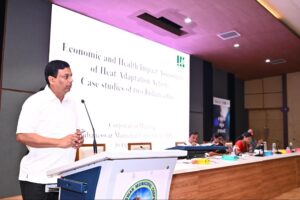
Bhubaneswar Municipal Corporation Prioritises Heat Adaptation with Support for Project CHHANW
On October 30, 2024, Bhubaneswar Municipal Corporation (BMC), a primary stakeholder of the study project, hosted a high-level stakeholder presentation in the Corporation meeting for the project “Economic and Health Impact Assessment of the Heat Adaptation Action- Case Studies from India” led by the Institute of Economic Growth (IEG), based on an earlier presentation for […]

Purnamita Dasgupta Discusses Heat-Health Risks and Economic Impacts at National Symposium
Professor Purnamita Dasgupta, Chair Professor and Head of the Environmental and Resource Economics Unit at the Institute of Economic Growth, Delhi, delivered a keynote address on the assessment of heat-health risks and economic impacts at a national symposium organised by the Indian Meteorological Society Pune, Indian Institute of Tropical Meteorology, and India Meteorological Department. Professor […]