
Mainstreaming Nonformal Interactions as a Method of Qualitative Data Collection in Health Research
Indian Journal of Public Health (Volume 69,Issue 3 July-September 2025)

Nonformal interactions (NFIs) are yet to be a part of qualitative research protocols. Informal interactions, often used in building rapport, are
sometimes mentioned synonymously or rather casually to represent the nonformal component of methods as well. Researchers, however, seldom consider NFIs as a core or contributory method to address the research question. We present our experiences with this data collection method, the rules of engagement with participants, subsequent analysis in synergy with the data collected through conventional methods, and its unique role in exploring the sensitive domains of inquiry to address knowledge gaps.
Key words: Inductive approach, nonformal interactions, qualitative research method
Formal, nonformal, and informal learning modes are well‑recognized and distinct entities in the field of pedagogy and have space in the generic realm of epistemological processes. When it comes to the hard terrain of knowledge generation, we depend on the formal methods of data collection rather exclusively. This may go well with the deductive approach and quantitative research that are inherently dependent on positivism and well‑defined structures. However,
there are certain recondite areas in health sciences where we are likely to hit a wall if we continue to pursue the path of formal methods alone, especially when we are following an inductive and qualitative approach. In such areas, demands of reflexivity would always push a researcher to break the barriers posed by the rules of measurements and venture into the realm of insights. Critical insights course‑correct deductive interpretations, enrich the evidence base, and inform the
interventions, particularly in programmatic contexts where both providers and those accessing the services are equal partners.Formal learning is well‑defined and circumscribed by narrow curricular models. Informal learning is unstructured and not measured through qualifications.[1] In contrast, nonformal or
“less formal” learning lacks a clear definition and straddles across key elements of education. Defined in terms of “what it is not,” it is a negative concept of sorts.[2] Nevertheless, it
shares characteristics of formal learning and can, therefore, be accredited with a focus on content that relates to the learners’ needs with a higher degree of flexibility. In human resource management, informal interview context is an important consideration to have a better chance of assessing
applicants accurately. Informal interactions also find mention in industrial relations to co‑create employees’ participation.[3]
While informal interactions can be a preferred option in certain contexts, and one respondent in a case study is quoted as “informality is king!,” the caution is that several issues are not specifically touched upon.When it comes to qualitative research, the term “nonformal interactions (NFIs)” is yet to be a part of the mainstream lexicon. Informal interactions are mentioned occasionally in the context of building rapport or understanding of situations and settings. They may be mentioned synonymously (or Address for correspondence: Prof. Rajib Dasgupta, Center of Social Medicine and Community Health, Jawaharlal Nehru
University, New Delhi ‑ 110 067, India. E‑mail: dasgupta.jnu@gmail.com This is an open access journal, and articles are distributed under the terms of the Creative
Commons Attribution‑NonCommercial‑ShareAlike 4.0 License, which allows others to remix, tweak, and build upon the work non‑commercially, as long as appropriate credit is given and the new creations are licensed under the identical terms. For reprints contact: WKHLRPMedknow_reprints@wolterskluwer.comSubmitted: 15‑Mar‑2025
Accepted: 14‑May‑2025 Revised: 12‑May‑2025 Published: 04‑Oct‑2025 How to cite this article: Dasgupta R, Chaturvedi S. Mainstreaming
nonformal interactions as a method of qualitative data collection in health research. Indian J Public Health 2025;69:341‑3.
casually) to represent the nonformal component of methods as well, but researchers seldom consider NFIs as a recognized or formal method to address research questions. We present our experiences and perspectives with this data collection technique, its unique role in exploring the sensitive domains of inquiry for covering knowledge gaps, the rules of engagement with participants, and subsequent analysis in synergy with the data collected through in‑depth interviews (IDIs), key informant interviews (KIIs), or focus group discussions (FGDs).he researchers’ group at the International Clinical Epidemiology Network (INCLEN) was tasked with the evaluation of the polio eradication initiative in India in the aftermath of the huge surge of wild poliovirus cases in 2002 and 2006 in some western districts of Uttar Pradesh and the Kosi River belt of north Bihar. The root cause in north Bihar was related to physical access and last‑mile delivery in the riverine belt; this was resolved by vaccine delivery innovations (including novel human resource strategies). In contrast, the challenge in western Uttar Pradesh was the presence of endemic pockets of cultural resistance against immunization, labeled as social resistance and vaccine hesitancy. Conventional approaches were proving to be inadequate for correctly identifying and deconstructing it to be able to shape interventions.The INCLEN Program Evaluation Network had, by this time, a decade’s experience of extensive and multicentric use of qualitative approaches for informing and course‑correcting public health interventions, and we proceeded with those tested methods and protocols in western Uttar Pradesh as well. Initial analysis and interpretation indicated the emergence of some highly sensitive themes and domains that were inadequately covered in the IDIs and FGDs. We had to innovate and supplement the standard methods to “crack the riddle” and uncover critical explanations. In that short phase of the learning curve, we used informal interactions in search of newer techniques. During this quick interim process, several stakeholders opined that some critical insights, especially those relating to sensitive domains, would not be captured if we solely depended on conventional data collection methods. They also shared with us, off the record, that some of their own responses in the IDIs and FGDs were ulterior, politically correct, and tutored. This led to the evolution of NFIs as a supplementary technique and its subsequent incorporation into the course‑corrected protocol. In the data collection that lasted for 3 weeks (December 2006 through January 2007), including a National Immunization Day, a total of 76 IDIs and 8 FGDs were conducted. In addition to these conventional methods, 156 NFIs with certain key stakeholders were also organized in parallel to supplement data obtained through conventional methods and cover the gaps.[4] The criticality of this method was cardinal to analyzing the phenomena that led to the cultural resistance to oral polio vaccine and contextualize the situations in which this cultural resistance sustained itself across supplementary immunization activities.[5] We subsequently mainstreamed NFIs as a research method in a larger multicentric study, covering six states of India, to derive a contextual understanding of pathways and processes associated with childhood undernutrition.[6] NFIs were built into the study design from the beginning to unpack some of the sensitive domains, with care taken to see that these were not from among respondents who had participated in IDIs or FGDs. The selection of respondents for NFIs was purposive and based on the assessment of senior investigators about the individuals who were best placed to provide additional, supplementary, and insightful information on the emerging themes that were incompletely explored during the initial rounds of data collection. The information gathered was then added and triangulated with other methods while organizing and analyzing the data to arrive at the emerging themes and the final model. NFI quotes were also used to substantiate the phenomena. We have formalized and used NFIs in several large‑scale studies since then and incorporated this method in research protocols and ethics applications.[7] Based on our collective experience, a “to‑do” list to systematically conduct NFIs and analyze the data is being offered here for inclusion in the repertoire of qualitative research methods. The sampling should be purposive and based on the assessment of senior investigators about individuals who would be able to provide additional and supplementary insights on the sensitive domains that are likely to be underexplored. The guide should be without any explicit structure (or a very light structure) and may evolve with the progress of interactions. The locus of information gathering should be mobile and dynamic, decided and driven by the respondent, and investigators should in no way try to “control” the environment or shape the discourse. The respondent should be allowed to proceed at her/his own pace, without the apparent use of the guide and without any written, audio, or video recording. Notes on the interaction and memoing should be completed immediately after the interaction; care should be taken to make the notes copious and capture as much detail as possible. Quotes should be recorded in verbatim, without any summing up or paraphrasing. The investigator conducting the NFI should also write her/his observations as a part of memos. The information gathered is then analyzed, triangulated, and integrated with or added to the
data emerging through IDIs, KIIs and FGDs and the decision to include the domain/theme‑wise NFI data is done based on consensus arrived at among the core team of experienced investigators. Observations recorded by experienced on‑site investigators may also be considered as data. The researcher is also a participant in the process of coconstruction in qualitative inquiries. All this is done with the explicit awareness about the inherent limitations of such techniques and also that some of their aspects are liable to be erroneously misclassified as “journalism,” a criticism that even the founder of the Grounded Theory was not immune to.[8] Field situation in several areas of public health research is getting increasingly complicated,
and a researcher is likely to engage with stakeholders and respondents who are either marginalized and intimidated or well‑informed, resourceful, and tutored. A large constituency of frontline workers, for example, may be squeezed between these two positions. The struggle of a qualitative researcher in interpreting phenomena is constantly surrounded by such challenges; NFIs may offer some help here. The ethics dimensions of NFIs need some guideposts. By its very nature, it is neither feasible nor advisable to predetermine a sample size for NFIs as decisions are made both “in‑the‑moment” and “in situ” to take “opportunistic advantage of a specific event or conversation when they present themselves.”[9] In terms of sample size, NFIs need to adhere to the criteria of theoretical sampling, i.e., there is no a priori size, and data are contextualized to build concepts and theory. NFIs are in the realm of “microethics,” rooted in the inside view that is “subtle, variable, arising and linked to interactive methods.” It is also one of “relational judgments,” with the main study obtaining full ethics approval in which NFIs are formally included and nested in its microethics dimensions.[10] NFIs are best conducted by senior researchers with certain safeguards: Do no harm; be transparent regarding the purpose; not fabricate or falsify evidence or knowingly misrepresent information or its source (usual rules of confidentiality and anonymization shall apply); and be cognizant of the researcher’s positionality and reflexivity. While planning and conducting NFIs, certain newer dimensions of information gathering, especially those of biosemiotics, may also be introduced and added to the conventional memoing and
field notes generated by the team of investigators, the way it can be done with IDIs, KIIs, and FGDs. One such newer dimension is to capture the “body in the data” in a qualitative manner that is sensitive and ethical. The details of capturing the thought process and emotions of the participants through nonverbal
communications or body language cannot be discussed here for paucity of space but these newer components may help the investigators in triangulation as well as interpretation of emerging themes. In the true sense of the Glaserian approach, “All is Data.” We need to constantly re‑emphasize that every bit of information contributes to assessing the value of summative significance as against a set of insightless mathematical verdicts
Acknowledgment
The authors acknowledge and record their sincere appreciation for Professor (Dr.) Narendra Kumar Arora, Professor (Dr.) Vivek Adhish, Dr. Leena Sushant, and Dr. Vaishali Deshmukh for their deep insights in synthesizing the empirical evidence from several large multicentric INCLEN projects and contributing to the theoretical framing of this method.
Financial support and sponsorship
Nil.
Conflicts of interest
There are no conflicts of interest.
RefeRences
1. Johnson M, Majewska D. Formal, Non‑Formal, and Informal Learning: What are They, and How can we Research Them? Cambridge (UK): Cambridge University Press and Assessment Research Report; 2022. Available from:https://www.cambridgeassessment.org.uk/Images/665425‑ formal‑non‑formal‑and‑informal‑learning‑what‑arethey‑and‑how‑can‑we‑research‑them‑.pdf. [Last accessed on 2025 May 11].
2. Johnson M, Majewska D. What is non‑formal learning (and how do we know it when we see it)? A pilot study report. Discover Educ 2024;3:148.
3. Townsend K, Wilkinson A, Burgess J. Filling the gaps: Patterns of formal and informal participation. Econ Ind Democr 2013;34:337‑54.
4. Dasgupta R, Chaturvedi S, Adhish SV, Ganguly KK, Rai S, Sushant L, et al. Social determinants and polio ‘endgame’: A qualitative study in high risk districts of India. Indian Pediatr 2008;45:357‑65.
5. Chaturvedi S, Dasgupta R, Adhish V, Ganguly KK, Rai S, Sushant L, et al. Deconstructing social resistance to pulse polio campaign in two North Indian districts. Indian Pediatr 2009;46:963‑74.
6. Chaturvedi S, Ramji S, Arora NK, Rewal S, Dasgupta R, Deshmukh V, et al. Time‑constrained mother and expanding market: Emerging model of under‑nutrition in India. BMC Public Health 2016;16:632.
7. Deshmukh V, Agarwala T, Mohapatra A, Kumar S, Acquilla S, Das MK, et al. Challenges of biomedical research collaboration in India: Perceptions of Indian and international researchers. PLoS One 2024;19:e0305159.
8. Bryant A. A Constructive/ist response to Glaser. About Barney G. Glaser: Constructivist grounded theory? Forum Qual Soc Res 2003;4:15. Available from: https://www.qualitative‑research.net/index.php/fqs/article/view/757. [Last accessed on 2025 May 11].
9. Swain J, King B. Using informal conversations in qualitative research. Int J Qual Methods 2022;21:1‑10. [doi: 10.1177/16094069221085056].
10. Truog RD, Brown SD, Browning D, Hundert EM, Rider EA, Bell SK, et al. Microethics: The ethics of everyday clinical practice. Hastings
Related Post

Paper Presentation – Second Annual Conference on Public Finance and Policy at Madras School of Economics, Chennai
Purnamita Dasgupta and Girika Sharma presented a paper titled ” Climate Finance for Adaptation and Sustainable Development in India,” co-authored by both, at the 2nd Annual Conference on Public Finance and Policy held at Madras School of Economics, Chennai, with their presentation delivered virtually. The conference was held on March 7 and 8, 2024. The […]
Paper Presentation – DAAD-sponsored International Conference entitled “Climate Change: A Socio-geological Perspective” organised by The School of Liberal Arts, Indian Institute of Technology Jodhpur
Shivangi Shankar and Girika Sharma made a presentation titled “How Heat Affects HerHealth: Exploring the Impact of Increasing Temperatures on Women’s Health,” at the DAAD-sponsored International Conference entitled “Climate Change: A Socio-geological Perspective,” organised by The School of Liberal Arts, Indian Institute of Technology Jodhpur, with their presentation delivered virtually. The conference was held on […]
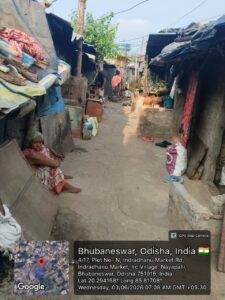
Heat, Thunderstorms and Pakhala: Commendable work by our Field Teams
The project team has been implementing cool-roofs as an intervention as an experiment with treatment households having their roofs painted with white reflective paint, and a control group which does not receive this intervention. Measurements of indoor and outdoor temperature and humidity, and physiological parameters are being done for both groups. Our field teams are […]
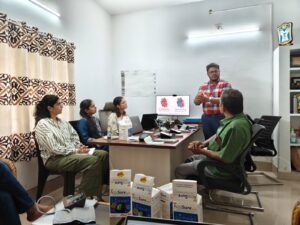
Field Investigator Training on Physiological and Meteorological Measurement devices and tools in Bhubaneswar
A full-day classroom training was held on 26th April 2026 in Bhubaneswar, Odisha, for Field Investigators to aid them with technical knowledge and practical skills in physiological measurement, meteorological monitoring, and survey administration. The first session focused on how to use devices for measuring the physiological parameters, such as blood pressure monitors, heart rate monitors, […]