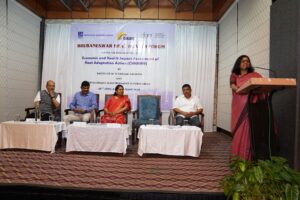
Climate change has elevated extreme heat from an ‘invisible’ public health threat to an urgent challenge, with heat stress being a leading cause of weather-related deaths, and disproportionately affecting warmer regions and the poor. Between 2001 and 2013, the population of India exposed to extremely hot temperatures increased by 10 million. It is estimated that cities could warm by 4°Celsius on average by 2100, posing significant health challenges for populations living within dense urban networks5. It is well-established that both hot temperatures and heatwaves are associated with excess mortality risk. A heatwave is usually defined as ‘a period of extreme high temperature that lasts several days’. There is no internationally accepted definition of heatwaves. Definitions vary based on how a heatwave is identified and what indicators are used to measure its various dimensions. Beyond fatalities, extreme heat is also linked to the disruption of the everyday and the ordinary: school closures, livelihood loss, water shortages, power outages, and food insecurity. These impacts on lives and livelihoods are further shaped by one’s ability to respond to heat a relationship mediated by an individual’s social, cultural, economic, and physiological status. To address these heat-health risks and their differential impacts on vulnerable groups, heat action plans (HAPs) have emerged as a dominant planning instrument.
Under the aegis of the World Health Organization Regional Office for Europe (WHO/Europe), the EURO-HEAT Project (2005-2007) guidance document on heat-health action plans (HHAPs) was developed for designing national and sub-national HAPs. The eight ‘core elements’ of a comprehensive HHAP include: (i) agreement on a lead body for coordination, (ii) accurate and timely alert systems, (iii) heat-related health information plan, (iv) reduction in indoor heat exposure, (v) particular care for vulnerable population groups, (vi) preparedness of the health and social care system, (vii) long-term urban planning, and (viii) real-time surveillance and evaluation. City-specific plans generally differ based on how each core element is incorporated, the associated scope and complexity of implementation.
A severe heatwave in Odisha in 1998 led to the development of the first State heat response plan in India. Following the release of the WHO/Europe guidance document, more HAPs were launched in the country. Several State governments and municipal corporations have received funding and external technical support from domestic and international organisations and experts to develop HAPs in India. Ahmedabad’s 2013 HAP was developed in collaboration with the Indian Institute of Public Health (IIPH) Gandhinagar, Public Health Foundation of India (PHFI), Natural Resources Defense Council (NRDC), Mount Sinai School of Medicine, and Rollins School of Public Health at Emory University. The Bhubaneswar HAP, launched in 2016, was prepared by Integrated Research and Action for Development (IRADe) and supported by the International Development Research Center, Government of Canada. The 2019 Rajasthan HAP was developed in collaboration with UNICEF Rajasthan’s Disaster Risk Reduction Section. In an analysis of 37 HAPs, significant variations were found in the actions recommended to be carried out in response to heatwaves, ranging from health systems capacity- building to green roofs.
Related Post

Purnamita Dasgupta Discusses Heat-Health Risks and Economic Impacts at National Symposium
Professor Purnamita Dasgupta, Chair Professor and Head of the Environmental and Resource Economics Unit at the Institute of Economic Growth, Delhi, delivered a keynote address on the assessment of heat-health risks and economic impacts at a national symposium organised by the Indian Meteorological Society Pune, Indian Institute of Tropical Meteorology, and India Meteorological Department. Professor […]

Sustainable Cooling Matters
By Sandipta Rath, Anwesha Mishra, Sruti Mohapatra, Purnasha Pany CHHANW team, Institute of Economic Growth “Buying an AC was never a choice but a need. When my father collapsed due to sunstroke during work, we made the decision to prioritize his health even if it means we will be tied to monthly installments and high […]
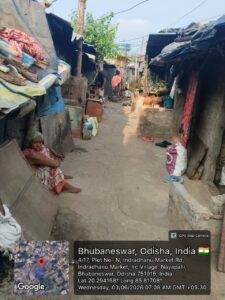
Heat, Thunderstorms and Pakhala: Commendable work by our Field Teams
The project team has been implementing cool-roofs as an intervention as an experiment with treatment households having their roofs painted with white reflective paint, and a control group which does not receive this intervention. Measurements of indoor and outdoor temperature and humidity, and physiological parameters are being done for both groups. Our field teams are […]