Health SDGs are at risk from climate change: Evidence from India
Plos One (26 November, 2025)

Abstract
Climate change poses significant risks to human health in India, with 80% of the pop ulation located in areas highly vulnerable to extreme events, such as cyclones, floods and heatwaves. While India has made progress on several Sustainable Development Goals (SDGs), risks from climate change can undermine the achievements. This
study examines the impact of climate vulnerability on health related targets under the SDG2 on Zero Hunger and SDG3 on Good Health and Well-being. Statistical and
econometric methods including a multivariate logistic regression are used to examine the relationship between climate vulnerability, social and economic determinants of health and health outcomes in 575 districts of rural India. 2 national datasets are used for the analysis, namely, a health survey and a climate risk and vulnerability assessment, with a sample size of 154,547 children and 447,348 women. A highly significant and negative relationship is found between climate vulnerability and attainment levels of health outcomes. Districts that are highly vulnerable to climate change consistently underperform on the studied health targets as compared to districts which are less vulnerable to climate change. For instance, the chance of children being underweight and that of women having non-institutional deliveries, is 1.25 and 1.38 times higher, respectively, in districts that are highly vulnerable to climate change than districts that are less vulnerable. While the extent of the adverse impact varies, the findings establish the necessity to take account of the adverse impacts of climate change on health outcomes, apart from the socio-economic and access related factors that have conventionally been considered as relevant in influencing these outcomes. in LMICs like India. There is an urgent need for timely action to address climate change risks, including effective adaption in health, to ensure that the desired health and well-being outcomes can be achieved and sustained, amidst rising climate risks
1.introduction
Risks to human health from climate change are on the rise globally, adversely impacting and undermining multiple dimensions of health and well-being [1,2], including in india [3,4].
climate change impacts on health include increasing mortality and morbidity from extreme events such as heatwaves [2,5], droughts, and floods [2]; spread of vector borne diseases [6,7] and altered disease patterns, disruptions in access to health care [8], destruction of health infrastructure [8]; and impacts on health-seeking behavior [9,10], to name a few.
for instance, evidence shows that long term exposure to extreme heat increases the risk of death from existing illnesses including cardiovascular and respiratory illnesses, along with the direct impacts, such as exhaustion, headache, sleep disturbances and heat stroke [11–13].
climate risks can adversely impact the achievement of the sustainable develop ment goals (sdgs) of the un [14].
the sdgs comprise of seventeen global goals and targets enshrined under each goal, and are intended to ensure health, justice and prosperity [15].
health is an important component of the sdgs, with sdg 2 (zero hunger) and sdg 3 (good health & wellbeing) containing several health- related targets, such as ending hunger, improving nutrition, reducing mortality, improving access to healthcare, and ensuring universal health coverage.
it is critical to accelerate progress in achieving the health targets of the sdgs, since the current trends in these are insufficient to meet the health goal by 2030 [16]. climate change, climate-related risks, and disasters can pose significant challenges to achieving the sdg targets [17], and potentially disrupt the achievement of sdgs [18,19].for effectively addressing shortfalls and reducing disparities in health amongst vulnerable populations, it is therefore essential to take serious note of these impacts and drive investments in the right direction.the extent of vulnerability differs from one region to another, especially in a large country like india, and is influenced by local climatic, geographical, and socio-economic factors [20] around 64% [21] of the indian population stays in rural areas while 46% of the population is employed in agriculture in 2023 [22].
as compared to urban areas, rural areas are under-served in terms of health care services [23] and infrastructure such as roads, electricity, hous ing and communications [24].the gap in consumption expenditure between rural and urban areas has been reducing [22] given the significant share of population residing in rural areas, estimated to be around 915 million in 2023 [25] mapping and quantify ing the shortfalls in health outcomes which are attributable to climate change impacts can help develop appropriate adaptation policies.the impacts of climate hazards on human health are severe and already being felt globally as well as in india [26–29].
this study is an innovative attempt merging data from the largest national survey on health with climate data, to examine and provide quantifiable evidence on the links between climate and health outcomes in india. it examines whether climate action can contribute to achieving good health.
the objective of the study is thus set-up to provide quantitative evidence on the extent to which climate change impacts and poses a barrier in achievinhealth-related sdg targets across different districts in rural india.the data used for the analysis is taken from national level surveys conducted by government agencies
Relevant findings from a desk review
The literature on non-climatic determinants influencing the attainment of health-related targets is well-established. We present below some of the key findings from the literature on these key determinants. Malnutrition alone is responsible for 45 percent of deaths among children under the age of five [30] and continues to be
a significant challenge in many parts of the world, with an estimated 149 million children under the age of five stunted, 45 million wasted, and 37 million overweight or obese as of 2022 [30]. It is concentrated in low- and middle-income countries, particularly in sub-Saharan Africa and South Asia. For India, the SDG 2 index score is 52, much below the target score of 100 [31]. The prevalence of stunting, being underweight, and chronic malnutrition in India is high, with significant regional disparities [32,33]. Around 36% of children under the age of five years were stunted, 32% were underweight, and 19% were wasted in India as per the National Family Health Survey 2019–2021 [34]. Poverty, poor sanitation, lack of access to healthcare, and inadequate education are among the key factors that contribute to the high burden of malnutrition in India, and elsewhere [35]. Malnutrition indicators also vary by demographic factors such as gender, age, education of the mother and the birth order of the child.The understanding on the socio-economic and cultural determinants of malnutrition has advanced significantly. Studies, both globally and in India, have found that female children (under the age of 5 years) are relatively more vulnerable to malnutrition than males due to various socio-economic and cultural factors that lead to prioritization of the needs of male children [36,37] Lower levels of parental education, particularly maternal education is also significantly associated with higher malnutrition rates among children [38] with education providing mothers with better knowledge of nutrition, health practices, access to healthcare [39,40] and implementation and utilisation of these for enhancing nutritional outcomes for children [41]. In India and elsewhere, maternal education, employment and socioeconomic status interact in many ways [42,43], for instance, higher maternal education can reduce the negative effects of low household wealth on child nutrition [44]. A study in Uttar Pradesh, India, found that the prevalence of stunting was significantly lower among children whose mothers had completed at least primary education [45]. Globally, evidence indicates that stunting, wasting, and being
underweight are more prevalent among male children born to mothers with no schooling, and amongst those from lower-income quintiles [46].Studies in some African countries found that children with siblings or with a higher birth order were more likely to be stunted and underweight [47]. A few Indian studies report similar findings that a higher birth order increases the likelihood of children being stunted and underweight [48,49]. Global evidence shows that in many households, resources such as food, attention and healthcare are spread thinner with more children and in some cases, are distributed based on birth order [50,51]. Globally, studies indicate that increased antenatal care (ANC), particularly when provided by skilled healthcare profes sionals, correlates positively with reduced risks of malnutrition among children, especially in low and middle-income countries [52], reducing neonatal and infant mortality [53], low birth weight [52], stunting [54], and prevalence of underweight children [55] India’s performance has been comparatively better in SDG 3, with an index score of 77 as compared to a target of 100 [31]. Significant advancements in maternal and child healthcare services have come from concerted efforts through programs and interventions under the National Health Mission [56,57], and targeted initiatives from the government focusing on high quality, comprehensive ANC while alleviating financial burdens on women [58]. Some schemes incentivize institutional childbirth and mitigate direct expenses [59], while others focus on improving the quality of care and services during labor [60]. Child mortality rates have reduced significantly in India [61,62] due to some of these efforts, though disparities persist in some regions and for specific disadvantaged groups [63]. Institutional deliveries in India have significantly increased over the past three decades with most states having already surpassed SDG targets (92%) for 2030. However, challenges persist in some regions, with institutional delivery rates below 80%. A lack of ANC, poor socioeconomic status, locational disadvantages, and higher birth order are among the challenges associated with lower utilization of institutional delivery in certain regions [64–66], manifested in terms of poor performance in key indicators [67–69]. Access to healthcare is a crucial determinant for achieving good health and health equity. Several studies in South Asia, including India, have identified access to health care as being critical for health promotion and health equity, and for addressing vulnerabilities across communities and overcoming gender disparities in health outcomes. Harsh geographic conditions, long distances to health centers, limited transportation, lack of services, absence of adequate and trained health care professionals, and financial barriers have been often noted as impacting access to equitable and quality health care [70–74]. Increasingly, climate change has become a major force disrupting health care delivery, undermining the social determinants of good health and reducing the capacity to provide health care, including universal health coverage [15], with the potential of significantly increasing health costs in LMICs [75,76]. Climate change is thus increasingly recognized globally as a major determinant of health, with differential and adverse impacts for vulnerable populations, including women and children. The need to address the impacts of climate change on health along with the other socio-economic determinants of health is being recognized [77]. In India, are preparing action plans on climate change and human health. However, the evidence base and understanding on the impacts due to climate change is weak. Prior to the current study, there have been no such attempt at quantifying the available evidence in terms of the impacts on human health in India at an All-India level, with sufficient granularity to understand differential impacts at
sub-national levels.
2. Materials and methods
Methods
The study uses statistical and econometric methods to examine the relationship between climate change and health outcomes. A multivariate logistic regression is estimated. Such estimation techniques have been used elsewhere to examine the relationship between climate change variables and health outcomes, such as in USA and China [78,79]. The health-outcomes studied are stunting, wasting, and being underweight for children under five years of age, andnon-institutional deliveries and problems in accessing health care for women aged 15–49 years. The role of climate change as a determinant for these health outcomes is captured by an explanatory variable on climatic vulnerability across districts. Other socio-economic variables are also included as determinants in the specification. The outcome in the logistic equation is specified as a dichotomous dependent variable taking a value of 0 or 1, depending on whether the outcome is observed or not (e.g., 1 if stunted, 0 if otherwise). The model provides the probability (p)that the event (e.g., stunting) will occur relative to the probability of its non-occurrence (1-p), providing the odds of the event occurring, and the odds ratio, with a reference category [80]. In a multivariate specification, each odds ratio [81] provides an estimate of the change in the odds or chances (e.g., of a child being stunted) that is associated with the corresponding explanatory variable (xi, e.g., climatic vulnerability), while controlling for the other independent variables(e.g., gender, age, mother’s education).Using a logarithmic transformation of the odds ratio (e.g., odds of being stunted),
a multivariate specification generates the log odds ratio for each explanatory variable in the model. Equation 1 presents 4 / 17 PLOS One |https://doi.org/10.1371/journal.pone.0335529 November 26, 2025 the general form of the specification used. βi (i = 1,2….k) denotes the coefficient of the corresponding independent variable,β0 is the intercept term and Xirepresents the independent variables in the model. p is the probability of the outcome (for
instance: if the child is stunted, then p = 1). The term (p/1-p) denotes the odds of the outcome occurring, while log(p/1-p) represents the log-odds (logit) of the outcome.
log(p/1–p)=β0+β1X1+β2X2+···+βkX
(1)The model is applied to a combined dataset, obtained by merging two datasets, namely the National Family Health Survey-Round 5 (referred to hereafter as NFHS) [82] and the Central Research Institute for Dryland Agriculture (CRIDA) [83] datasets. The former provides information on the progress in the SDG targets, the individual and household level information on health status, socio-economic variables of interest, and on access to health care. The CRIDA dataset provides information on the climate vulnerability across districts. District boundaries for the NFHS and the CRIDA datasets were matched and aligned to ensure consistency in merging the datasets. The data for stunting, wasting, being under weight and non-institutional deliveries is extracted from the Kids Recode (KR) file of the NFHS, while the data for the ‘problems with access to healthcare’ variable is extracted from the Individual Recode (IR) file for women. The IR and KR data files were merged with the climate vulnerability dataset at the district level, across 575 districts. There are 154,547 observations for children, and 447348 observations on women ailable in the merged datasets. The statistical and econometric estimations on the datasets were conducted using Stata software, version 16
Related Post

India is bracing for a new high in the ensuing summer season: Heat health governance will be the key to coping
India is bracing for a new high in the ensuing summer season: Heat health governance will be the key to coping,” Dr. Rajib Dasgupta discusses the increasing challenges posed by rising temperatures and heatwaves in India. He highlights that the Indian Meteorological Department has forecasted above-normal temperatures, particularly in central and eastern states like Odisha, […]
Professor Dasgupta Highlights Community-Centred Approach to Heat Action Plans at Delhi Science Forum
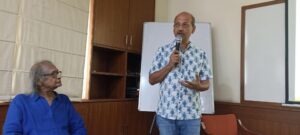
Professor Rajib Dasgupta, a co-principal investigator on project CHHANW, presented a talk titled “Heat Action Plans in a Warming India: Shifting the Gaze to Community-centred Approaches” at the Workshop on Science and Technology: Agenda for Self-reliant India organised by Delhi Science Forum on 31 August 2024 at Indian Social Institute, New Delhi. Other contributors to […]

Paper Presentation – Second Annual Conference on Public Finance and Policy at Madras School of Economics, Chennai
Purnamita Dasgupta and Girika Sharma presented a paper titled ” Climate Finance for Adaptation and Sustainable Development in India,” co-authored by both, at the 2nd Annual Conference on Public Finance and Policy held at Madras School of Economics, Chennai, with their presentation delivered virtually. The conference was held on March 7 and 8, 2024. The […]