

Jaipur Heat Health Forum
-
Event Date
19-09-2025 -
-
Event Time
12:00 PM - 04:00 PM
- Physiological and public health understanding of heat-health risks
- Planning, preparedness and implementation of risk reduction strategies
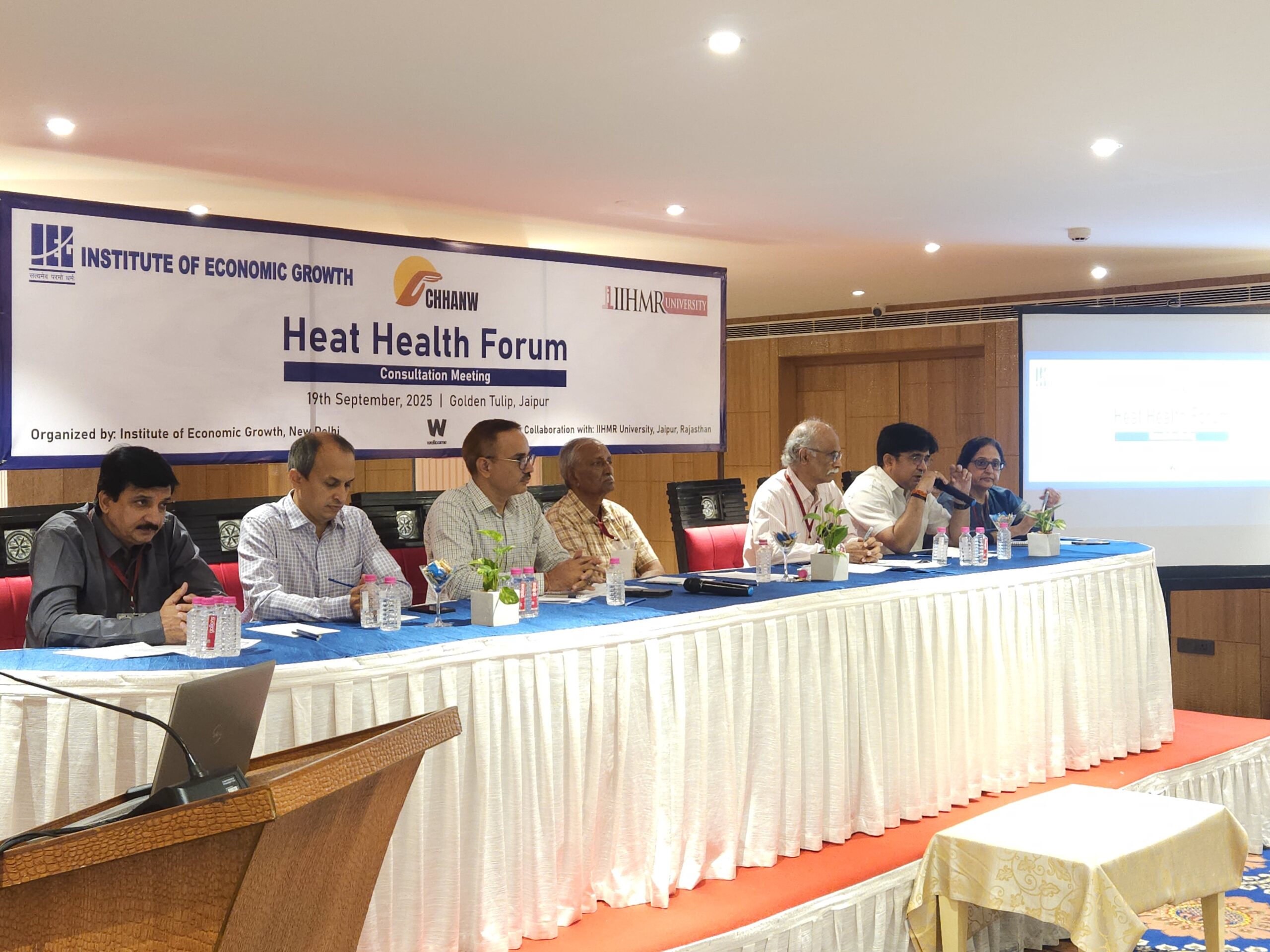 The panellists provided insightful opening remarks that set off lively discussions amongst all the stakeholders. Several participants appreciated the importance of the event in the context of Jaipur. We are grateful to all our speakers and participants for experience-sharing and thoughtful suggestions, including representatives from the Government of Rajasthan from the departments of Local Self Government, Animal Husbandry, Jaipur Nagar Nigam, IMD Meteorological Centre, Sawai Man Singh Medical College, NIMS University, the United Nations Children's Fund (UNICEF), Gramin Vikas Trust, Self-Employed Women's Association (SEWA), Bal Raksha Bharat, World Resources Institute (WRI), Malaviya National Institute of Technology, Jaipur, Khushi Baby, Watershed Organisation Trust (WOTR), UNFPA Rajasthan, Public Health Engineering Department (PHED), Alwar, Centre for Environment and Development Studies, IBTADA, IIS University, Anil Agarwal Environment Training Institute (AAETI), Synergy Sansthan, Vaagdhara and the Mahila Housing Trust.
The IEG Study team made contributions as follows:
The panellists provided insightful opening remarks that set off lively discussions amongst all the stakeholders. Several participants appreciated the importance of the event in the context of Jaipur. We are grateful to all our speakers and participants for experience-sharing and thoughtful suggestions, including representatives from the Government of Rajasthan from the departments of Local Self Government, Animal Husbandry, Jaipur Nagar Nigam, IMD Meteorological Centre, Sawai Man Singh Medical College, NIMS University, the United Nations Children's Fund (UNICEF), Gramin Vikas Trust, Self-Employed Women's Association (SEWA), Bal Raksha Bharat, World Resources Institute (WRI), Malaviya National Institute of Technology, Jaipur, Khushi Baby, Watershed Organisation Trust (WOTR), UNFPA Rajasthan, Public Health Engineering Department (PHED), Alwar, Centre for Environment and Development Studies, IBTADA, IIS University, Anil Agarwal Environment Training Institute (AAETI), Synergy Sansthan, Vaagdhara and the Mahila Housing Trust.
The IEG Study team made contributions as follows:
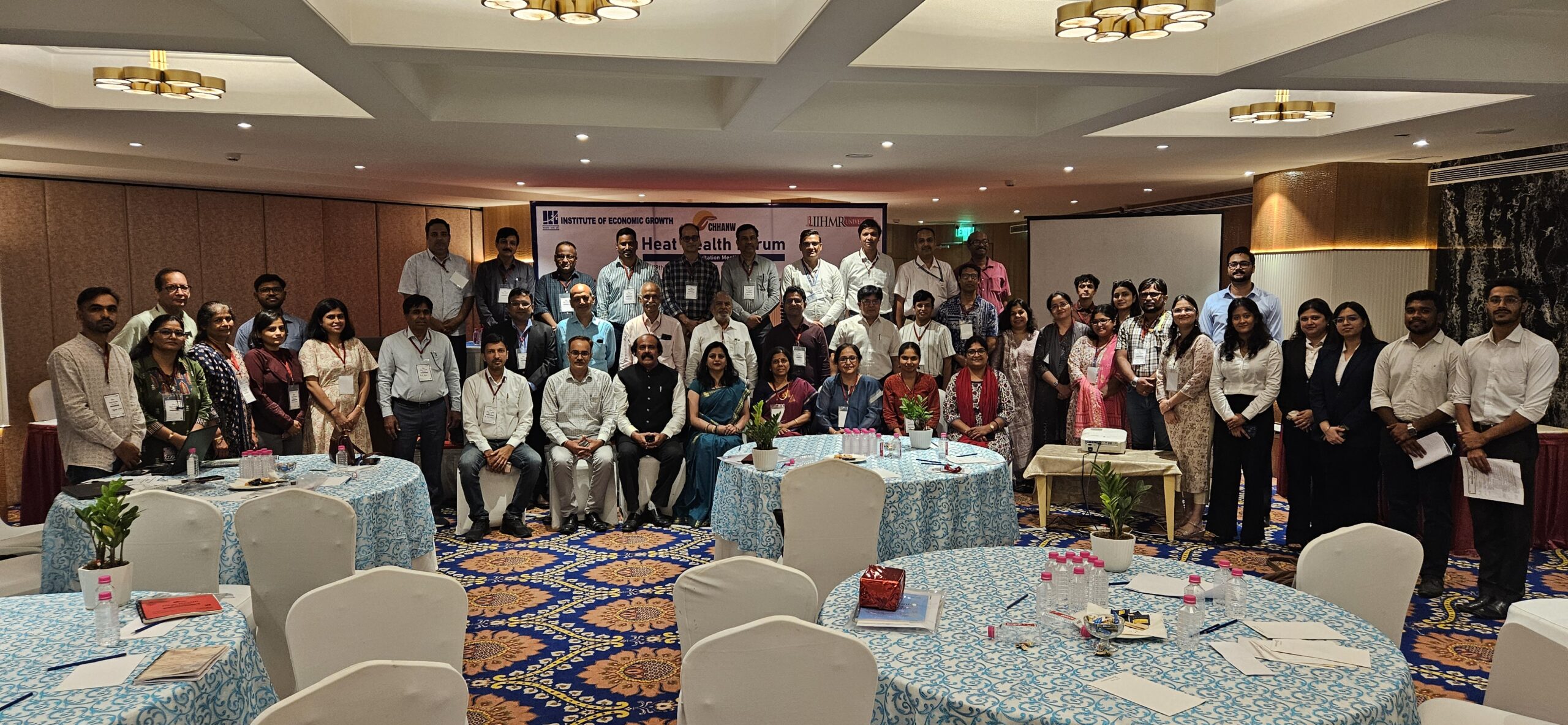 Prof. Purnamita Dasgupta (IEG) in her opening remarks set the tone for the convening, explaining the objective of the Heat Health Forum and the criticality of engaging multiple stakeholders for managing heat-health risks effectively. She also shared preliminary findings from a baseline household survey on heat related health risks as part of the ongoing Wellcome Trust funded CHHANW study.
Dr. William Joe (IEG) highlighted the growing recognition of the nexus of heat and health, and the relevance of the economic aspects of extreme heat for vulnerable households.
Prof. Rajib Dasgupta (JNU) provided the rationale for the technical session on physiological impacts of extreme heat, and focussed on the exacerbations of existing comorbidities on prolonged heat exposure.
Prof. Rupa Kumar Kolli (IITM) emphasized the importance of planning, preparedness, and implementation of measures to tackle extreme heat and the importance of optimizing climate information at local levels.
Prof. Meeta Keswani Mehra (JNU) stressed on the importance of climate mitigation, impacts and vulnerability assessments to ensure health system adaptation, occupational safety and for balancing heritage conservation, especially in the context of Jaipur.
Prof. Gautam Sadhu (IIHMRU) concluded the Heat Health Forum by providing a summary of the consultation, and Prof. Arindam Das (IIHMRU) delivered the vote of thanks.
Prof. Purnamita Dasgupta (IEG) in her opening remarks set the tone for the convening, explaining the objective of the Heat Health Forum and the criticality of engaging multiple stakeholders for managing heat-health risks effectively. She also shared preliminary findings from a baseline household survey on heat related health risks as part of the ongoing Wellcome Trust funded CHHANW study.
Dr. William Joe (IEG) highlighted the growing recognition of the nexus of heat and health, and the relevance of the economic aspects of extreme heat for vulnerable households.
Prof. Rajib Dasgupta (JNU) provided the rationale for the technical session on physiological impacts of extreme heat, and focussed on the exacerbations of existing comorbidities on prolonged heat exposure.
Prof. Rupa Kumar Kolli (IITM) emphasized the importance of planning, preparedness, and implementation of measures to tackle extreme heat and the importance of optimizing climate information at local levels.
Prof. Meeta Keswani Mehra (JNU) stressed on the importance of climate mitigation, impacts and vulnerability assessments to ensure health system adaptation, occupational safety and for balancing heritage conservation, especially in the context of Jaipur.
Prof. Gautam Sadhu (IIHMRU) concluded the Heat Health Forum by providing a summary of the consultation, and Prof. Arindam Das (IIHMRU) delivered the vote of thanks.