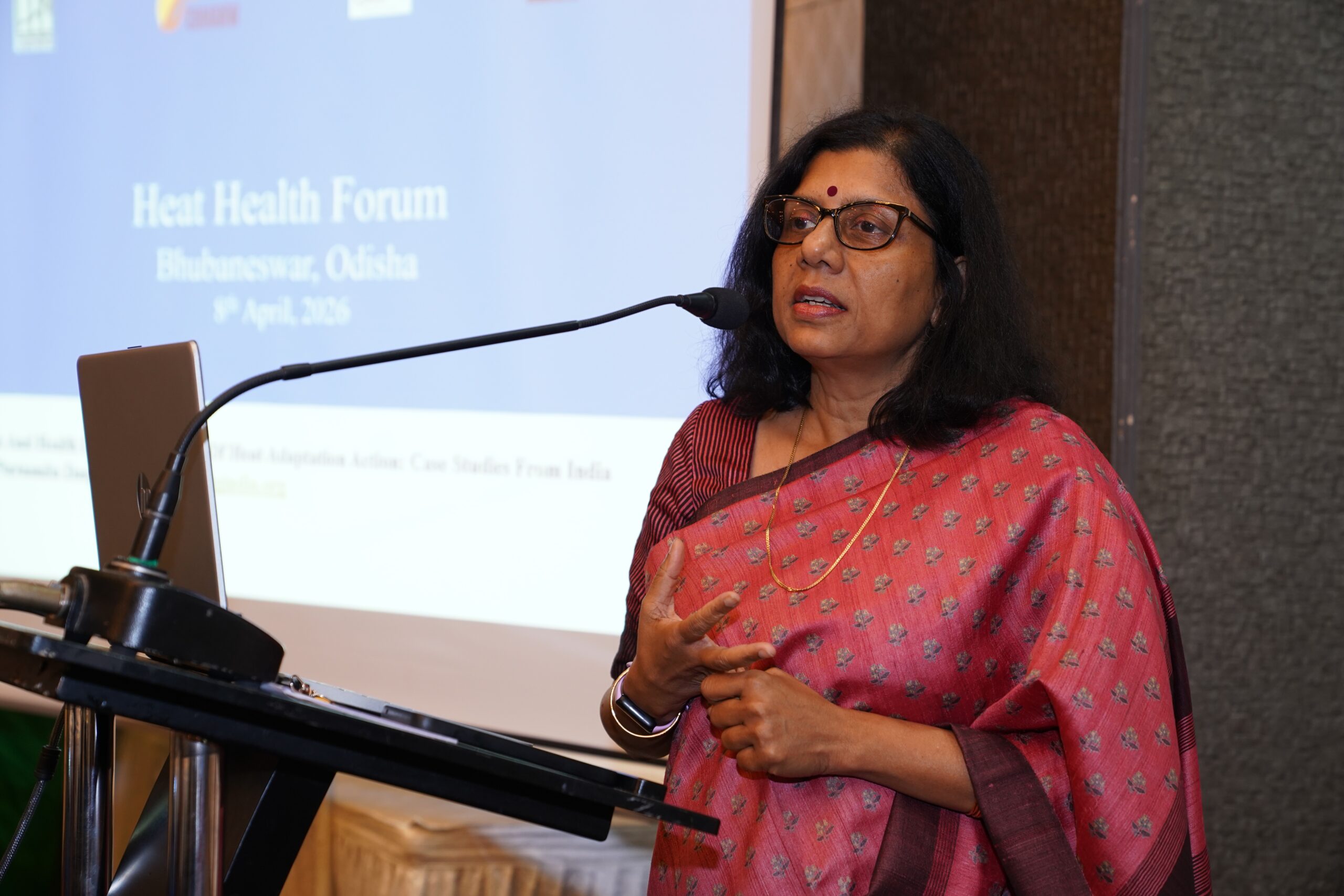
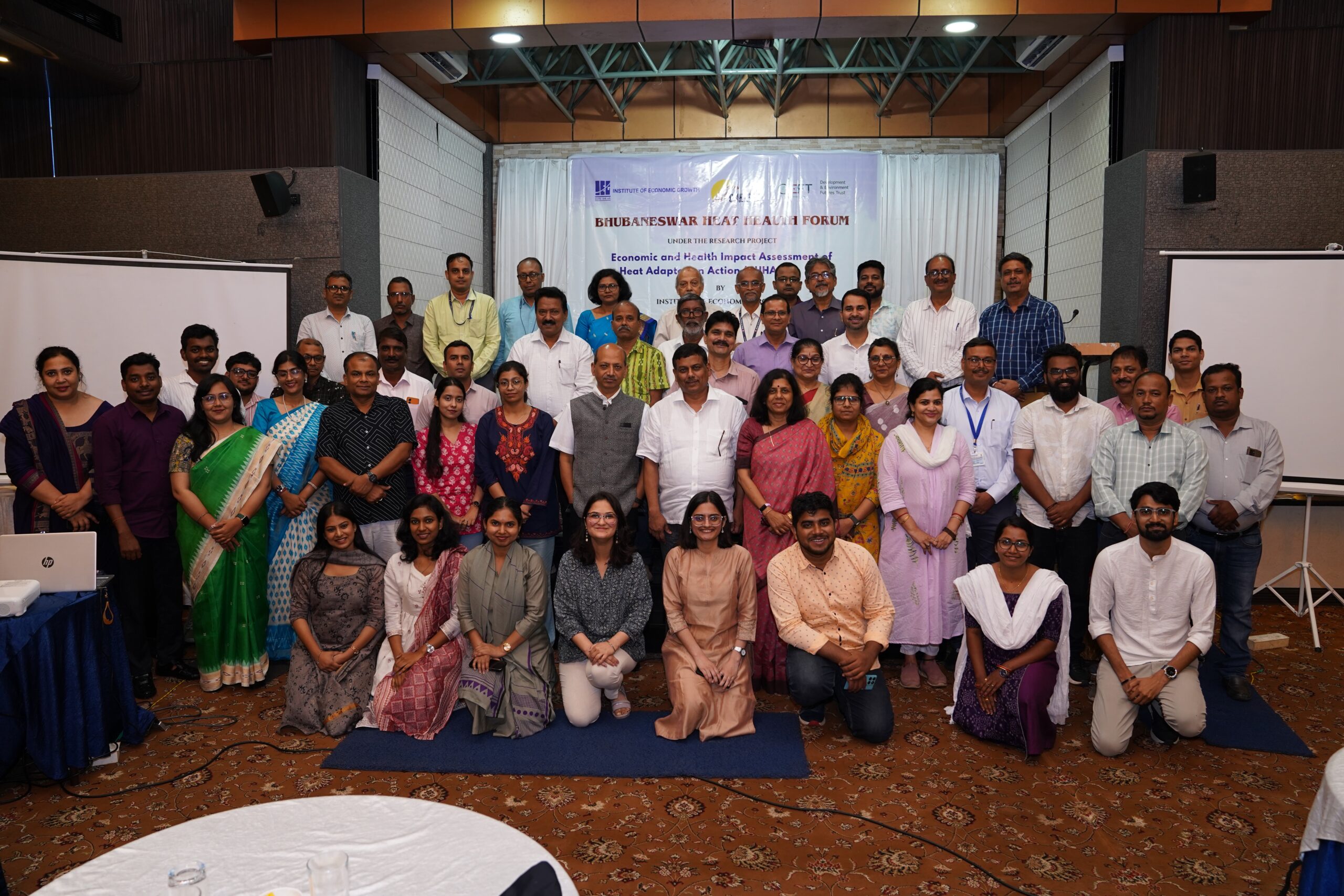
Bhubaneswar Heat Health Forum Calls for Strengthening Heat Adaptation Efforts
-
Event Date
8 April 2026 - 8 April 2026
-
Event Time
12:00 PM - 12:00 AM
The Bhubaneswar Heat Health Forum was held on 8 April 2026 under the aegis of the
“Economic and Health Impact Assessment of Heat Adaptation Action” (CHHANW) project. The Forum was hosted by the Institute of Economic Growth (IEG) in collaboration with the Development and Environment Futures Trust (DEFT).
The Forum served as a convening platform for stakeholders and experts across different domains related to heat risks to human health and included representatives from the government, academia, UN technical agencies, implementation partner organisations and civil society representatives.
The Forum commenced with welcome notes by Prof. Purnamita Dasgupta, Principal Investigator, IEG, and Dr. Arabinda Mishra, Co-PI and Chairperson, DEFT. Shri Kali Prasanna Mohapatra, IAS, Director of Higher Education, Government of Odisha graced the occasion as the Chief Guest and Smt. Swayamprava Mohanty, IAS, Special Secretary, Department of Women and Child Development, Government of Odisha as the Guest of Honour. Both emphasised urgency of adaptation strategies to reduce heat related challenges faced by vulnerable communities including staff at frontline institutions such as Anganwadi workers.
A review of heat action plan and management in Bhubaneswar city was presented by IEG and DEFT, which revealed that the Heat Action Plan is very well designed. The specific guidance is actionable and pioneering in certain aspects such as gender and early warning systems. BMC is credited with meeting almost 100% requirements of water and energy during heat seasons.
The event featured two technical sessions on
“Physiological and Public Health Understanding of Heat” and “Planning, Preparedness, and Implementation of Risk Reduction Strategies.” Experts from multiple disciplines and stakeholders held discussions highlighting the progress in understanding heat-heath challenges and timely heat-health preparedness within their own disciplines.
The consensus emerged on three key points:
- Firstly, need for a multi-stakeholder platform for deliberations at the city level for integrative adaptation strategies.
- Secondly, an urgent call for collecting and collating currently dispersed data for recording heat exposures and heat related illnesses.
- Thirdly, developing capacity, training and awareness initiatives targeted towards specific heat vulnerabilities such as cooling mechanisms and employer based health protection measures.
The Bhubaneswar Heat Health Forum brings together a broad-based coalition to address the slow crisis that heat-health concerns pose. This Forum needs to be institutionalised and convened on a regular basis to act as a force multiplier by bringing together policy makers, practitioners and the civil society.
There is an urgent need for a HHF to strengthen inter-agency collaboration to launch an effective response to the heat-health challenges. Bhubaneswar city is well-placed to make a land-mark contribution in this regard in India and globally.